





Decor Department

about The Decor Department

Welcome, Dear Student, to the Department of Interior Architecture and Scenography

The department aims to prepare distinguished designers in the fields of Interior Architecture and Scenography. It provides students with artistic sensitivity and manual skills necessary for expressing design ideas, while exposing them to the latest advancements in design technologies, building materials, finishing materials, and their environmental impact—both positive and negative. Students also gain a solid understanding of the history of art and civilization in Egypt and around the world.

In addition, the program equips students with digital design skills and the ability to visually communicate their concepts, while adhering to the professional code of ethics. This is achieved through a curriculum that combines core specialized courses, supporting subjects, basic sciences, and humanities, all of which contribute to shaping a designer capable of understanding and adapting to artistic, environmental, and social challenges in their professional life.

The Department of Interior Architecture and Scenography offers three academic programs:

  • Interior Architecture Program

  • Scenography Program

The two programs share all courses during the first and second academic years, in addition to a number of elective courses.
Furthermore, the department offers a Fee-Based Interior Architecture Design Program.


رسالة جامعة حلوان

Vision and Mission

Vision
To qualify researchers at both the local and international levels in the fields of Interior Architecture and Theatre, Cinema, and Television Set Design by advancing research standards in line with modern global practices. The department aims to enhance international collaboration, particularly in multidisciplinary research, academic conferences, and institutions that contribute to the development and progress of the Egyptian state, while strengthening the global presence of Egyptian researchers.

Mission
To prepare innovative researchers in the fields of Interior Architecture and Set Design for theatre, cinema, and television who are capable of contributing to environmental development and societal advancement in Egypt. The program focuses on providing high-quality research services and equipping researchers with a solid foundation in contemporary research methodologies, theories, and innovations. It also fosters the ability to develop creative solutions to professional challenges while adhering to the principles of integrity, intellectual property rights, and the ethics of scientific research. Graduates will be empowered to share knowledge and expertise using appropriate technological tools, professional skills, and non-traditional teaching methods in the fields of interior architecture and set design, or in practicing their profession.

Interior Architecture Department

untitled-design-47-scaled.jpg.webp

domains, directly influencing behavior and productivity through the design and qualities of the interior architectural space in which individuals live or work. It involves making design decisions that respond to human needs and define the functional and aesthetic characteristics of interior spaces — including form, material, color, and texture — tailored specifically to the preferences, habits, and lifestyles of individuals. The goal is to produce both functional and aesthetically pleasing environments that ensure user comfort.

This specialization is fundamentally rooted in the interaction between human behavior and the interior environment where people spend most of their time. Interior Architecture is an interdisciplinary field, intersecting significantly with architecture and various artistic disciplines.

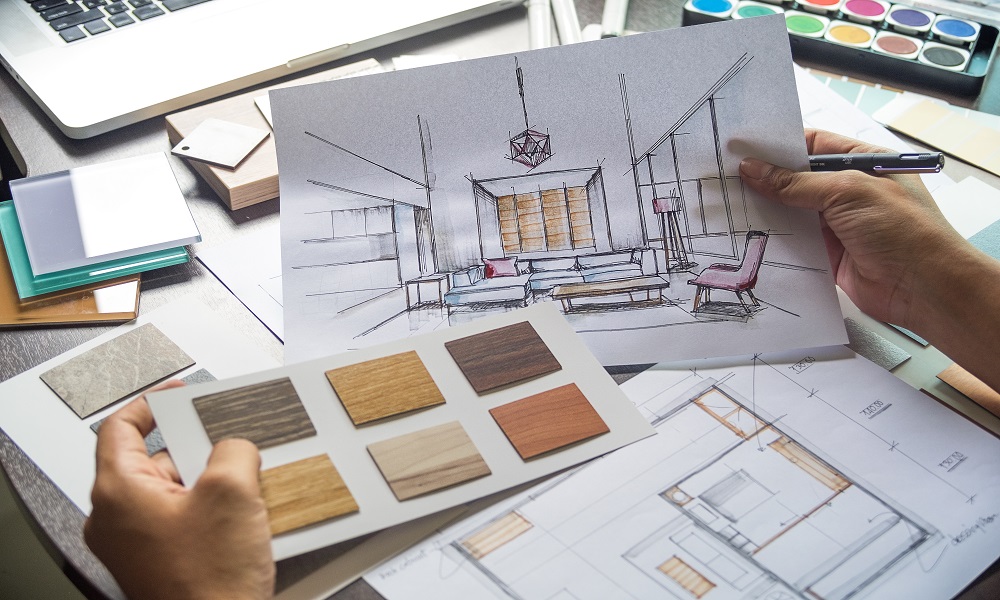
The Interior Architecture Program aims to prepare professionals capable of designing new interior spaces, repurposing existing ones, and solving functional issues through interior design and furnishing. The objective is to enhance users' functional performance and ensure safety, functionality, and beauty across a wide range of building types.

The role of an interior architect is to address the functional and aesthetic requirements of interior spaces within a professional framework, striving to elevate public taste, preserve historical and cultural heritage, and uphold environmental sustainability. The interior architect engages with various building components — including walls, floors, windows, doors, sanitary and electrical systems, ventilation, and furnishings — and must understand building types, construction methods, finishing materials, and relevant building codes and regulations to make sound design decisions that do not compromise the structural integrity of the building.

Scenography Department

Image

Scenography is one of the Fine Arts specializations focused on designing performance spaces across various forms of theatrical presentation, as well as set design for film, drama, television programs, and other broadcast platforms, whether on television or streamed online. This specialization also includes designing characters and costumes for performers—whether live actors or puppets.

The Scenographer engages with all visual elements seen by the audience within the performance space, including set design, lighting, costumes, props, puppets, and other complementary components. Scenography is a multidisciplinary field that intersects with architecture, interior architecture, painting, lighting, theatrical and cinematic directing, music, drama, and more.

Scenographic design involves creative decision-making that integrates technical elements within the stage, film, or television performance space, closely tied to the dramatic text, screenplay, or television script. The scenographer shapes the visual environment in terms of function, form, materials, and implementation technologies.

The Scenography Program aims to prepare specialists in designing and constructing performance spaces—both indoor and outdoor—for all types of live or recorded shows across various media, such as theater, opera, ballet, puppet theater and film, television drama, and cinematic productions.

Scenographers must handle materials and various treatments of all scenic components, which requires knowledge of building types, construction techniques, finishing materials, and both interior and exterior furnishing—closely aligned with the field of Interior Architecture and Art History as foundational knowledge for scenographic studies.

A scenographer must also have a deep understanding of human body proportions, movement, and characteristics to effectively design and create costumes, masks, props, and performance accessories—whether for live performers or puppets. They work as part of a multidisciplinary team and must possess the ability to read, interpret, and analyze a wide range of dramatic texts.

Interior Architecture Design Program (Fee-Based)

iad.jpeg

The aim of the Interior Architecture Design Program is to achieve leadership and excellence in the field of interior architectural design by fostering innovation and creativity, and integrating digital technologies in line with contemporary design trends and labor market demands—both locally and globally.

The program prepares interior designers who are fully aware of how to employ their tools, combining design knowledge and skills with digital tools to enhance the design process. These digital tools are used in service of design decision-making—as modeling, representation, analysis, or presentation tools—based on the designer’s input, without overriding the core of the designer’s conceptual thinking.

The Interior Architecture Design Program includes essential knowledge- and skill-based studies related to interior spaces and their functions, and how to address them design-wise in both horizontal and vertical dimensions in line with user requirements to enhance the function and form of the space. The program also covers color distribution techniques, appropriate lighting strategies, materials and finishing methods, sustainability concepts, building systems, and safety and control devices.

Furthermore, the program addresses specification writing, quantity surveying, legal rights, administrative aspects, and communication skills related to specialized projects. Students also gain technical knowledge in digital applications associated with the design process—such as computer-aided design (CAD)—which supports design decisions and ensures a balance between design thinking and digital proficiency.

جامعة حلوان

Helwan University strives to be a leading educational and research institution in technology and the arts, and excels in education and sciences according to international quality standards

  • Visits 11152
جامعة حلوان